Resources for Retirees – Rick Spence
Transcript
My name is Rick Spence. I retired from the Reedy Creek Fire Department and now serve as a chaplain for the Reedy Creek Fire Department. Retirees are often a significantly underrepresented demographic when building a behavioral health access program. These members have served their communities for a lifetime. Separation from that service can often mean a lack of purpose, a weakened sense of belonging, and limited access to available resources. This module will guide you when building a program for your retirees. The resources provided can be tailored to fit your agency’s needs. Preparing for life after service is so much more than just financial preparation. It is often employing the tools needed to maintain a sense of balance, find a new purpose and maintain those connections that were so valuable throughout this career.
Retiree – Course Chapters
1. Overview of A Retiree Program
Audio
Transcript
Resources for Retirees
Resources for Retirees
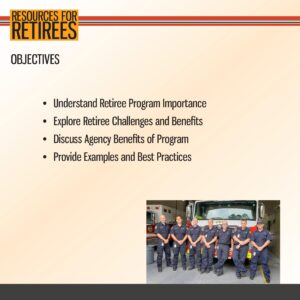
The objectives of this module are to help you understand the importance of retiree programs, explore the challenges and benefits faced by retirees, discuss the benefits of having a retiree program for your agency, and provide examples and best practices to help you create a successful program. By the end of this module, you will have a better understanding of the key elements necessary for creating and implementing a retiree program that can provide valuable support and resources to retirees in your community.
Description
Understand retiree program importance
Explore retiree challenges and benefits
Discuss agency benefits of program
Provide examples and best practices
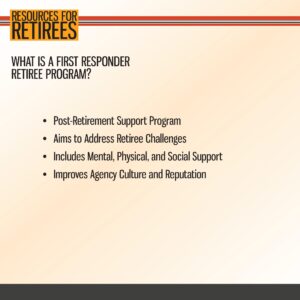
What Is A First Responder Retiree Program?
A first responder retiree program is a post-retirement support program that addresses the unique challenges retirees face. This program typically includes a range of support services such as mental, physical, and social support, designed to help retirees maintain their well-being and transition smoothly into retirement.
The purpose of a retiree program is to provide much-needed support for retirees who may experience challenges such as mental health issues, financial insecurity, and a loss of social connections after leaving their first responder jobs. By addressing these challenges, a retiree program can help retirees maintain their well-being and lead fulfilling lives after retirement.
A retiree program also benefits the first responder agency that implements it. It can improve the agency’s culture and reputation as a supportive employer, increase employee retention rates, and show that the agency values and cares for its employees even after they retire.
Description
Post-retirement support program
Aims to address retiree challenges
Includes mental, physical, and social support
Improves agency culture and reputation
Challenges Faced By Retirees
Retirees often face significant challenges that can make their transition to retirement difficult. One of the most common challenges is the loss of identity that can come with retiring from a career that has defined their identity for many years. Retirees may struggle to find a new sense of purpose and meaning in their lives. Another major challenge is social isolation. Retirees may be disconnected from their former colleagues and struggle to maintain meaningful social connections. This can lead to feelings of loneliness and depression.
Physical health issues can also be a challenge for retirees. The physical demands of first responder jobs can take a toll on the body, and retirees may find themselves dealing with chronic pain, injuries, or illnesses.
Finally, financial challenges can be a significant concern for retirees. The retirement benefits provided by first responder agencies may not be sufficient to cover all their expenses, and retirees may need to find ways to supplement their income. This can be especially difficult for retirees dealing with health issues or other challenges.
Description
Loss of identity
Social isolation
Physical health issues
Financial challenges
2. Retiree Support
Audio
Transcript
Mental Health Support For Retirees
Mental health support is crucial for retirees, particularly first responders exposed to traumatic events throughout their careers. The stress and pressure of their jobs can take a toll on their mental health and lead to issues such as depression, anxiety, and PTSD. Retirees may struggle to cope with the psychological impact of their experiences without adequate support, which can negatively affect their overall well-being.
In addition to its impact on individuals, mental health issues can also have wider social and economic consequences. Retirees with untreated mental health issues may struggle to find employment or be unable to participate fully in their communities, leading to social isolation and reduced quality of life. They may also require expensive medical treatment, which can strain the healthcare system and their own finances.
By providing mental health support through retiree programs, agencies can help retirees address their mental health needs and maintain their well-being. This support can include access to counseling and therapy, stress reduction and self-care programs, and peer support groups. These services can help retirees improve their mental health, stay connected with others, and lead fulfilling and productive lives after retiring.
Description
Challenges faced by retirees
Importance of mental health support
Examples of mental health services
Counseling and therapy services
Stress reduction and self-care programs
Peer support groups
Mental health education and training
Access to crisis intervention services
Referrals to community mental health resources
Retirees from first responder jobs may face physical health challenges due to the physical demands of their work. For example, firefighters, police officers, and paramedics are required to be in excellent physical condition to perform their duties effectively. The physical demands of their jobs can lead to injuries, chronic pain, and other physical health issues that may persist into retirement.
Some common physical health issues retirees face include musculoskeletal disorders, cardiovascular disease, and respiratory issues. Retirees may also experience mobility and balance issues, which can increase the risk of falls and injuries. Addressing these physical health issues is essential to maintaining retirees’ overall well-being and quality of life.
One way agencies can provide physical health support to retirees is by partnering with local healthcare providers or community organizations offering low-cost or free physical health services. For example, agencies may partner with local gyms or fitness centers to offer discounted memberships to retirees or partner with physical therapists or other medical specialists to offer discounted or subsidized services. Agencies may also be able to negotiate group rates for physical health services, such as health screenings and wellness checks, to make these services more accessible and affordable for retirees.
Agencies can provide retirees with resources and information on low-cost or free physical health services available in their communities. This may include information on local health clinics, community health fairs, and other resources that retirees can access to support their physical health and well-being.
By leveraging community partnerships, virtual services, and other resources, agencies can help retirees maintain their physical health and well-being throughout their retirement years.
Description
Physical demands of first responder jobs
Common physical health issues faced by retirees
Examples of physical health services
Local Gyms
Health Screenings
Community Health Fairs
Additional Considerations For Physical Health Support
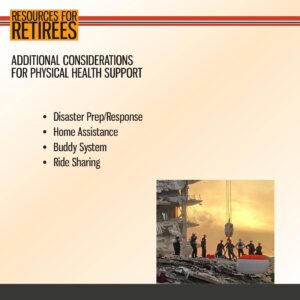
Other aspects of assisting your members with their physical wellness could be addressed by building in systems within your program. As an aging population, some unique concerns come such as disaster preparation and response, home assistance, and transportation to and from appointments. In the event of a disaster, retirees may need assistance with boarding up their homes or evacuating. Having a network of volunteers who can help with these tasks can be invaluable. Home assistance can include housekeeping, meal preparation, and home repairs, which can help retirees maintain a safe and comfortable living environment. A buddy system can be established to connect retirees with volunteers who can help them get to doctor’s appointments, pick up groceries, or run other errands. Finally, ride-sharing can be an effective way to help retirees access necessary medical care or other services without the burden of driving themselves. By providing these services, retiree programs can help promote physical health and well-being among their members.
Description
Disaster Prep/Response
Home Assistance
Buddy System
Ride Sharing
Financial Support For Retirees
Retirees often face significant financial challenges transitioning from full-time employment to retirement. For many first responders, retirement may come earlier than expected due to injury, disability, or other factors, making it difficult to plan for long-term financial security. In addition, retirees may face unexpected expenses related to healthcare or other needs, as well as changes in their income and expenses that can impact their overall financial stability.
Given these challenges, it is important for agencies to provide financial support to retirees as part of a comprehensive retiree program. This may include access to financial planning services, assistance with retirement benefits and paperwork, and referrals to financial resources and programs to help retirees meet their financial needs.
One example of a financial service that may be offered to retirees is access to financial planning services. This may include workshops or individual consultations with financial advisors who can help retirees plan for their long-term financial security, set financial goals, and make informed decisions about their retirement savings and investments. Financial planning services may also include education on retirement benefits, such as Social Security and pension benefits, and assistance with paperwork and other administrative tasks related to retirement.
Another example of a financial service that may be offered to retirees is access to financial resources and programs. This may include information on government programs and resources to help retirees meet their financial needs, such as low-income energy or food assistance programs. Agencies may also partner with local non-profit organizations or financial institutions to offer retiree-specific financial services, such as low-cost loans or credit counseling services.
Description
Financial challenges faced by retirees
Importance of financial support
Examples of financial services
financial planning
Medicare/insurance assistance
retirement seminars
Social Support For Retirees
Retirement from first responder jobs can be a significant life transition and can lead to a sense of isolation and loss of identity. Retiree programs can provide critical social support services to help retirees maintain a sense of connection and community with their peers.
Social events are one of the primary ways agencies can help retirees stay connected. Social events range from large–scale events like retirement parties to smaller get–togethers like coffee or happy hour gatherings. These events allow retirees to connect, share experiences, and build relationships with their peers. Volunteer opportunities are another way agencies can help retirees stay connected and engaged in their communities. Volunteer work allows retirees to continue serving their communities while also providing them with a sense of purpose and fulfillment. Volunteer opportunities may include serving on local boards or committees, working with youth programs, or assisting with community events.
Support groups and mentoring programs can also be valuable resources for retirees. These programs offer retirees the opportunity to connect with others who have gone through similar experiences and can provide a space to share their challenges, experiences, and insights. Mentoring programs, in particular, can be especially beneficial as they allow retirees to share their knowledge and experience with new or current first responders. This can help retirees maintain a sense of purpose and connection to their former profession while supporting current first responders’ ongoing development.
Description
Social isolation and loss of identity
Importance of social support
Examples of social services
Social events
Volunteer opportunities
Support groups
Mentoring programs
3. Benefits of a Retiree Program
Audio
Transcript
Benefits To Retirees
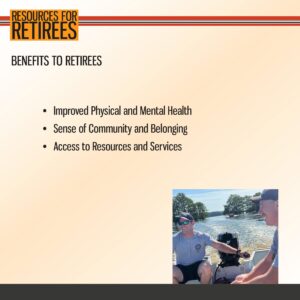
Various services provided by retiree programs can support the health and well-being of retirees. The benefits of these programs are diverse and varied, and they can considerably improve the quality of life for retirees. Retiree programs can assist retirees in maintaining their sense of connection, purpose, and fulfillment by offering support in areas including mental health, physical health, social support, and financial preparation. Supporting retirees is crucial for their well-being and that of their organization. Retiree programs can promote the ongoing training of current first responders, help maintain healthy ties between the agency and its past employees, and ultimately help assure the agency’s continued success.
Description
Improved physical and mental health
Sense of community and belonging
Access to resources and services
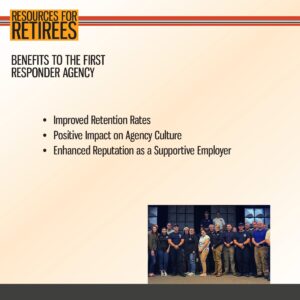
Even though retiree programs focus on post-employment for your members, your agency also benefits from such programs. You may find a reduction in turnover rates by showing your commitment to your employees during and after their careers are done.
In addition to improved retention rates, a retiree program can positively impact agency culture. By prioritizing the well-being of its retirees, the agency sends a clear message that it values its employees and their contributions. This can create community and camaraderie among current and retired first responders and contribute to a more positive work environment.
Finally, a retiree program can enhance the agency’s reputation as a supportive employer. This can be particularly important in attracting and retaining top talent in a competitive job market. By offering a comprehensive retiree program, the agency can distinguish itself as an employer that cares about the well-being of its employees and is committed to supporting them throughout their careers and beyond. Overall, a retiree program can offer significant benefits to retirees and the agency that implements it.
Description
Improved retention rates
Positive impact on agency culture
Enhanced reputation as a supportive employer
Preparing Your Members For Retirement
As a first responder organization, preparing your members for retirement is an important part of supporting their wellbeing throughout their careers. Retirement can be a major life transition, and it’s essential to provide resources and support to help members make a successful transition.
One key way to support members in retirement preparation is through retirement seminars. These seminars should be offered around 6 months to a year prior to retirement, giving members ample time to plan and prepare. Retirement seminars can cover a range of topics, including financial planning, emotional preparation, and staying connected to the first responder community.
Financial planning is a critical aspect of retirement preparation, and seminars can provide valuable information and resources to help members navigate this process. Seminars may cover topics such as retirement benefits, tax planning, and investment strategies.
Emotional preparation is also an important aspect of retirement readiness. Seminars can provide members with tools and resources to manage the emotional challenges of retirement, including transitioning from a career they’ve been committed to for many years.
Staying connected to the first responder community can be an important factor in maintaining a sense of purpose and belonging after retirement. Seminars can help members identify opportunities to stay involved, such as volunteer opportunities or mentorship programs.
A sample outline of a retiree workshop/seminar will be provided in the resources section of this module.
Description
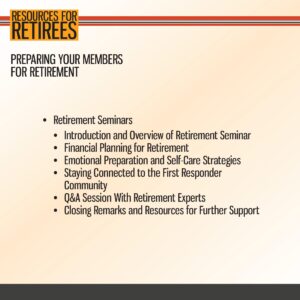
Retirement seminars
Introduction and overview of retirement seminar
Financial planning for retirement
Emotional preparation and self-care strategies
Staying connected to the first responder community
Q&A session with retirement experts
Closing remarks and resources for further support.
Agency Run Program/Non-Profit
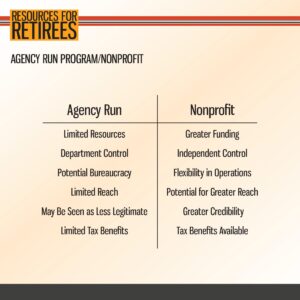
When considering your program, you will want to consider how the program is set up, and maintained and what will give the program the best chance of success and sustainability. An agency-run retiree program is controlled by the agency and has limited funding. However, it does receive direct support from agency staff. In contrast, a non-profit retiree program is independent of the agency and has access to grants and donations. It also has greater flexibility in programming and access to community resources. Agencies should carefully consider their goals and available resources when deciding which option is best for their retiree program.
There are a few examples of retiree programs set up through a non-profit that has created and maintained successful programs.
The Los Angeles Fire Department, Chicago Police Department, and Palm Beach County Fire Rescue are set up as non-profits with rules and by-laws governing their programs.
Description
| Agency Run | Non-Profit |
| Limited Resources | Greater Funding |
| Department Control | Independent Control |
| Potential Bureaucracy | Flexibility in Operations |
| Limited Reach Potential for | Potential for Greater Reach |
| May be seen as less legitimate | Greater Credibility |
| Limited Tax Benefits | Tax Benefits Available |
4. Setting up your Retiree Program
Audio
Transcript
Key Elements of a Successful Program
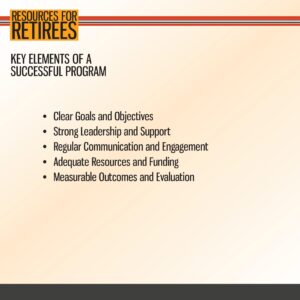
A successful retiree program requires several key elements to ensure its effectiveness. First, clear goals and objectives must be established to guide the program’s focus and activities. Strong leadership and support are also essential to ensure the program is well-run and supported by those in charge.
Regular communication and engagement are also critical to maintaining a sense of community and connection among retirees. Adequate resources and funding must be provided to support the program’s activities and ensure its sustainability over time. Finally, measurable outcomes and evaluation are necessary to assess the program’s impact and determine areas for improvement.
By incorporating these key elements, a retiree program can provide significant benefits to retirees, including improved physical and mental health, a sense of community and belonging, and access to valuable resources and services.
Description
Clear goals and objectives
Strong leadership and support
Regular communication and engagement
Adequate resources and funding
Measurable outcomes and evaluation
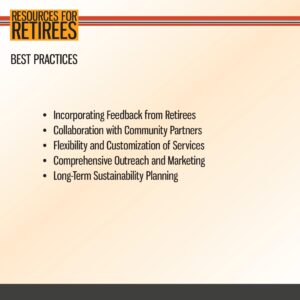
To ensure the success of a retiree program, it is crucial to follow best practices. One of the most important practices is incorporating retiree feedback to tailor programs to their needs. This creates a sense of ownership and involvement and results in more effective services.
Collaboration with community partners is another key practice. Building partnerships with community organizations and businesses can help expand services and resources for retirees while also increasing the program’s visibility and impact in the community.
Flexibility and customization of services are also essential. Retirees have diverse needs and preferences, so offering a range of services and allowing for customization can help ensure that the program is relevant and valuable to all participants.
Comprehensive outreach and marketing are critical for successful retiree programs. Effective communication and outreach strategies can ensure that retirees know available services and how to access them.
Finally, long-term sustainability planning is necessary for program success. Establishing sustainable funding sources, developing partnerships, and building a solid volunteer base can help ensure the program’s longevity and continued success.
Description
Incorporating feedback from retirees
Collaboration with community partners
Flexibility and customization of services
Comprehensive outreach and marketing
Long-term sustainability planning
Starting a Non-Profit Retiree Program
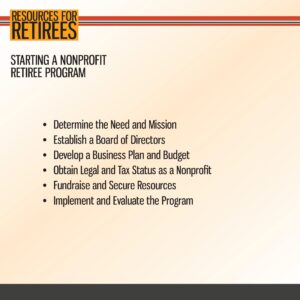
Starting a non-profit retiree program requires careful planning and execution. The first step is to determine the need and mission for the program, which involves researching to understand the needs of the retiree community and how the program can meet those needs. Once the need and mission have been identified, the next step is establishing a board of directors to oversee the program’s development and implementation.
Developing a business plan and budget is the next critical step. This involves outlining the program’s objectives, goals, and strategies and creating a budget that reflects the program’s expected costs and revenue streams. Obtaining legal and tax status as a non-profit is also essential. This involves completing the necessary paperwork and filing for non-profit status with the appropriate state and federal agencies.
Fundraising and securing resources is another critical aspect of starting a non-profit retiree program. This can include soliciting donations from individuals, foundations, and corporations and applying for grants and other forms of funding. Comprehensive outreach and marketing are also essential to ensure that the program reaches its intended audience and that retirees know the available services and resources.
Finally, implementing and evaluating the program is vital to ensuring its success. This involves recruiting and training staff and volunteers, developing and implementing programs and services, and continuously evaluating and improving the program to meet retirees’ needs effectively. Through careful planning, execution, and evaluation, a non-profit retiree program can provide valuable support and resources to retirees and their communities.
Description
Determine the need and mission
Establish a board of directors
Develop a business plan and budget
Obtain legal and tax status as a non-profit
Fundraise and secure resources
Implement and evaluate the program
Conclusion
In conclusion, retiree programs play a vital role in supporting first responder retirees’ physical, social, and financial needs. A successful program should incorporate key elements such as clear goals, strong leadership, regular communication, adequate resources, and measurable outcomes to ensure its effectiveness. Additionally, starting a non–profit retiree program requires careful planning and execution. However, it can provide retirees with an excellent opportunity to maintain a healthy mind, body, and spirit. By implementing these strategies, we can support and empower our first responder retirees to lead fulfilling lives after their years of service.
Description
Retiree programs are essential for supporting the physical, social, and financial needs of first responder retirees
Key elements of a successful program include clear goals, strong leadership, regular communication, adequate resources, and measurable outcomes
Starting a non-profit retiree program requires careful planning and execution, but can provide retirees with a meaningful way to maintain a healthy mind, body and spirit into their retirement years.
Resources
Thank you for reviewing this training module. Please see the resource for more in depth information on many of the included topics.
5. Retiree Task Book Agency
6. Retiree Non-Profit Task Book
Download Retiree Non-Profit Task Book
Retirees Starting Non-Profit First Responder Retiree Program
Disclaimer:
This task book is designed to provide comprehensive guidance for first responder agencies looking to establish or improve their retiree programs. However, we understand that not all agencies have the resources or funding to complete all of the steps outlined in this book. It is important to remember that even small efforts, such as gatherings and luncheons, can go a long way in keeping retirees engaged and supported.
We encourage agencies to use this task book as a flexible guide and to adapt the strategies and resources to fit their specific needs and limitations. It is not necessary to complete every step in order to have a successful retiree program. The most important thing is to prioritize the needs of your retirees and take action to support and engage them in meaningful ways.